How to Turn Credit Card Rewards into Investment Shares and Boost Your Savings
A practical guide to converting credit card points into shares or investment funds, with steps to choose the right card and avoid common mistakes.

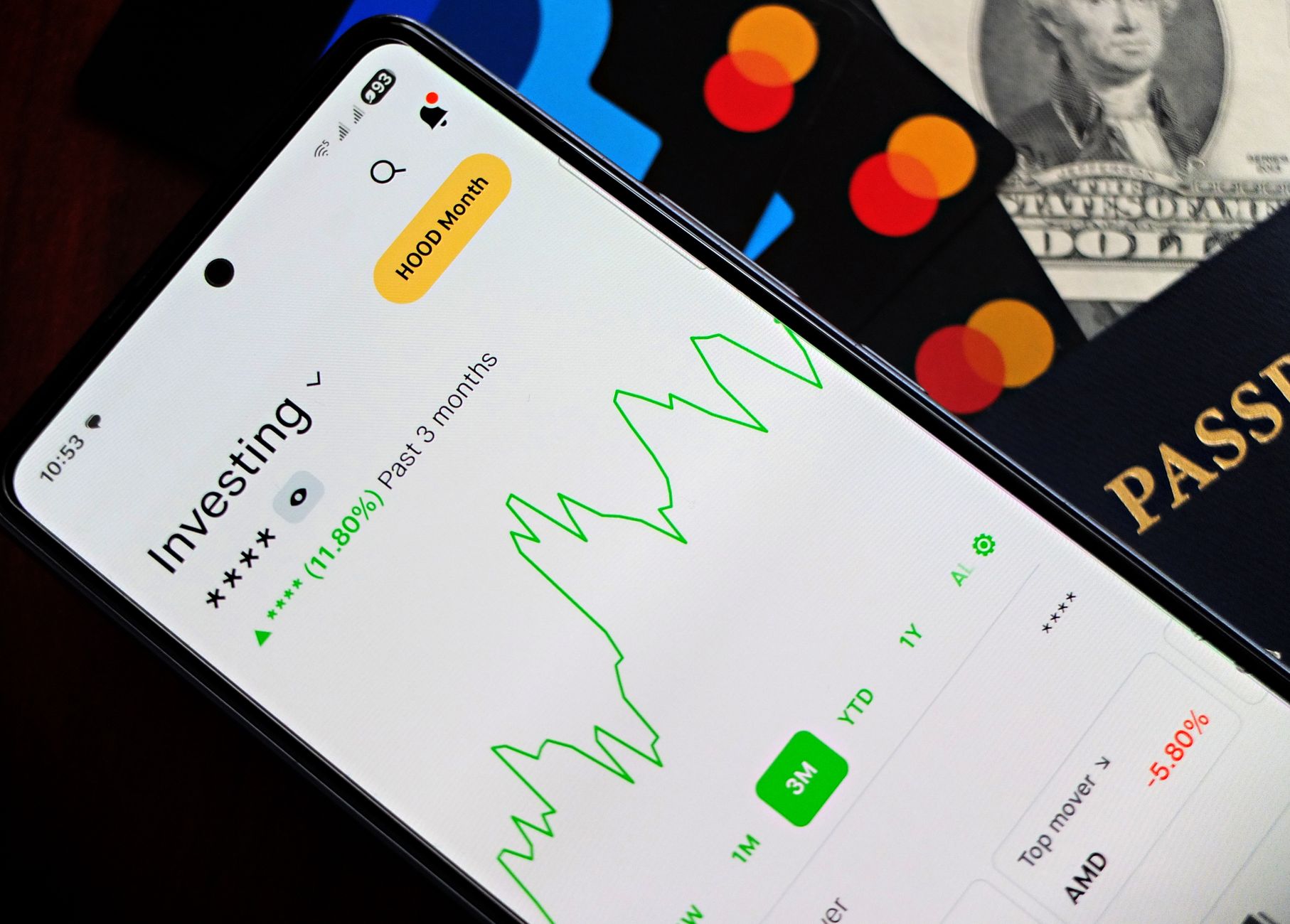
Most of us accumulate cashback or reward points after every purchase, but only a few know these points can be turned into shares or investment funds. The idea does not require advanced financial expertise, just a card that supports converting points into investment tools, and a few practical steps to avoid unnecessary interest.
Which cards allow converting points into investments?
Global banks and some local banks have launched dedicated programmes for their customers that allow converting points into shares on different exchanges or into exchange-traded funds (ETFs). A clear example is the “InvestPoints” programme at Bank X or “RewardInvest” at Bank Y. In each case, the customer is given two basic options: withdraw points as cash value or convert them into an investment. Your choice depends on your financial goal; if you want your balance to grow over time, converting to shares is the most suitable option.
Step one: Read the conversion terms carefully
Before you apply for a credit card account, look for the phrase “convert points to investment” in the terms and conditions page. Check the conversion rate – often it is 100 points = 0.01 share or the equivalent of 0.5% of a share’s value. Some banks impose a minimum threshold of no less than 5,000 points to activate conversion. If the threshold is high, you may need another card or wait to accumulate points.
Also, watch out for conversion fees. Some banks charge a flat fee (for example, £5 per conversion) or a percentage fee on the value of the share received. In rare cases, fees are waived if the conversion is done directly through the bank’s app.
Step two: Choose a card with a high cashback or points rate
Not every card awards the same number of points per £1 spent. The “SuperCash” card gives 2 points per £1 on supermarket spending, while the “TravelPlus” card gives 1.5 points on travel bookings. If your goal is to convert points into shares, focus on the categories where you spend the most. For example, if a large part of your budget goes on fuel and groceries, choose a card that offers the highest points on these items.
In addition, temporary promotional offers (such as “double your points in Ramadan”) can speed up the points accumulation needed for conversion.
Step three: Set up an investment account linked to the card
Often you are required to link your credit card to an investment account within the bank. If you do not have an investment account, create one via the app. The process takes a few minutes and requires identity and address proof documents. After linking, you will be able to choose the share or fund you want to convert your points into.
Practical tip: Choose shares with high liquidity (such as shares of fast-growing companies) or diversified ETFs to reduce risk. If you are unsure, start with an ETF that tracks the general market index; these funds often carry low management fees and let you benefit from market diversification.
Step four: Monitor performance and timing of conversion
Converting points into shares is not just a withdrawal, but an investment that needs monitoring. If you are investing in individual shares, watch company news and price changes. In the case of exchange-traded funds, you can rely on general market indices.
The timing of conversion is also important. Some banks allow you to accumulate points over several months and then convert them in one lump sum. If the share price is low during that period, you will get more shares for the same number of points.
Practical examples
Let’s try a real-world example: A woman named Sarah uses the “SuperCash” card, which gives her 2 points per £1 on supermarket spending. In March, she spent £2,000 on groceries, which means 4,000 points. Naturally, the minimum threshold for conversion is 5,000 points, so she added £500 of fuel spending (which gives her an additional 1,000 points) to reach 5,000 points.
Sarah chose to convert her points into an ETF focused on the technology sector. The conversion rate on her card is 100 points = 0.01 unit of the fund. So she will receive 0.5 unit. If the fund price is £200 per unit, she will get £100 of investment value, with no conversion fee.
Sarah’s experience shows that converting points into investment does not require large sums; all you need is to accumulate points from your daily spending and set a clear goal.
Avoid common mistakes
- Neglecting to pay the bill within the interest-free period, which adds interest on purchases and reduces the benefit of conversion.
- Converting points into shares when the price is high, without waiting for a price drop.
- Relying on a card with high annual fees without calculating the net return.
If you set a clear plan to accumulate points, and choose a card with a low minimum threshold to limit fees, turning rewards into investments becomes a simple step that adds real value to your savings.
Conclusion
Turning credit card rewards into shares or investment funds is not just a passing idea, but a smart way to turn everyday spending into financial assets. The key is to choose a card that supports conversion, read the terms carefully, accumulate points through the categories where you spend the most, and link the card to a reliable investment account. By sticking to paying your bill on time, you will achieve an extra return that surpasses traditional cashback, and put yourself on the path to building a gradual investment portfolio without hassle.